
⇐ To Home |
Tharpanam - Brahmayajnyam and Stothrams |
Quick Links: 1) Preliminaries... (2) Pithru Suktham Stothrams*... (3) Invoking Pithrus in lamp (and shortcut method for tarpan or offering Pindams)... (4) Tharpanam... (5) Karunya Tharpanam... (6) Brahmayajnyam... (7) Yama Tarpanam... (8) Notes... (9) Meaning of some recitations in English
(10) Srardham in detail...(11) Ancestor Reverence/Worship
| ஆசமனம்: | ஓம் அச்யுதாய நம:| ஓம் அநந்தாய நம:| ஓம் கோவிந்தாய நம:| கேஷவ, நாராயண (thumb - cheek) மாதவ , கோவிந்த (ring finger - eye) விஷ்ணொ, மதுஸூதந (index finger - nose) த்ரிவிக்ரம, வாமன (little finger - ear) ஸ்ரீதர, ஹ்ருஷீகெஷ (middle finger - shoulder) பத்மநாப (four fingers - navel), தாமோதர (four fingers - head) |
| ஷுக்லாம்...ஷாந்தயே | ஷுக்லாம் பரதரம் விஷ்ணும் ஷஷிவர்ணம் சதுர்புஜம் | ப்ரஸன்ன வதநம் த்யாயேத் ஸர்வ விக்னொப ஷாந்தயே || |
| ப்ராணாயாமம்: | ஓம் பூ: | ஓம் புவ: | ஓம் ஸுவ: | ஓம் மஹ: | ஓம் ஜந: | ஓம் தப: | ஓம் ஸத்யம் || ஓம் தத் ஸவிதுர் வரேண்யம் பர்க்கோ தேவஸ்ய தீமஹீ | தியோ யோ ந: ப்ரசோதயாத் || ஓமாபோ ஜ்யோதீ ரஸோ அம்ருதம் ப்ரஹ்ம பூர்ப்புவஸ் ஸுவரோம் | |
|
ஓம் மஹாகணபதயெ நம:
ஓம் ஸுப்ரஹ்மண்யாய நம: ஓம் உமாமஹெஷ்வராப்யா நம: ஓம் துர்காயை நம: ஓம் லக்ஷ்மீ நாராயணாப்யோ நம: ஓம் மஹா லக்ஷ்மையை நம: ஓம் குருப்யொ நம: ஓம் ஸரஸ்வத்யை நம: ஓம் வேதாய நம: ஓம் வேதபுருஷாய நம: ஓம் ஸர்வெப்யொ ப்ராஹ்மணெப்யோ நமோ நம: ஓம் இஷ்டதேவதாப்யோ நம: ஓம் குலதேவதாப்யொ நம: ஓம் ஸ்தாநதேவதாப்யொ நம: ஓம் க்ராமதேவதாப்யொ நம: ஓம் வாஸ்துதேவதாப்யொ நம: ஓம் ஷசீபுரத்தராப்யா நம: ஓம் க்ஷெத்ரபாலாய நம: ஓம் வாசஸ்பதயே நம: ஓம் மாதாபிதரப்யா நம: ஓம் ஸர்வெப்யொ தேவேப்யொ நமோ நம: ஓம் ரவ்யாதி நவக்ரஹ அஷ்டதல சதுர்தலெஷு ஸ்தித ஸர்வதேவதாப்யொ நம: |
ॐ महागणपतये नमः ।
ॐ सुप्रह्मण्याय नम: । ॐ उमामहेश्वराभ्यां नमः । ॐ तुर्कायै नम: । ॐ लक्ष्मीनारायणाभ्यां नमः । ॐ महा लक्श्मैयै नम: | ॐ गुरुभ्यो नमः । ॐ सरस्वत्यै नमः । ॐ वेदाय नमः । ॐ वेदपुरुषाय नमः । ॐ सर्वेभ्यो ब्राह्मणेभ्यो नमो नमः । ॐ इष्टदेवताभ्यो नमः । ॐ कुलदेवताभ्यो नमः । ॐ स्थानदेवताभ्यो नमः । ॐ ग्रामदेवताभ्यो नमः । ॐ वास्तुदेवताभ्यो नमः । ॐ शचीपुरंदराभ्यां नमः । ॐ क्शॆत्रपाला|य नम: ॐ वसॉश्पतयॆ नम: | ॐ मातापितृभ्यां नमः । ॐ सर्वेभ्यो देवेभ्यो नमो नमः । ॐ रव्याति नवक्रह ऄश्टतल चतुर्तलॆशु स्तित सर्वतॆवताप्यॉ नम: |
|
ॐ मित्राय नमः
ॐ रवये नमः ॐ सूर्याय नमः ॐ भानवे नमः ॐ खगय नमः ॐ पुष्णे नमः ॐ हिरण्यगर्भाय नमः ॐ मारिचाये नमः ॐ आदित्याय नमः ॐ सावित्रे नमः ॐ अर्काय नमः ॐ भास्कराय नमः |
1 )ஓம் மித்ராய நம:
2 )ஓம் ரவயெ நம: 3 )ஓம் ஸூர்யாய நம: 4 )ஓம் பாநவெ நம: 5 )ஓம் ககய நம: 6 )ஓம் புஷ்ணெ நம: 7 )ஓம் ஹிரண்யகர்பாய நம: 8 )ஓம் மாரிசாயெ நம: 9 )ஓம் ஆதித்யாய நம: 10)ஓம் ஸவித்ரெ (சாவித்ரே) நம: 11)ஓம் அர்காய நம: 12)ஓம் பாஸ்கராய நம: |
ஓம் ஆதித்யாதி நவக்ரஹ தேவதாப்யோ நம: ஓம் நக்ஷத்ராதி தேவதாப்யோ நம:
ஸௌர மண்டல மத்யஸ்த்தம் ஸாம்பம் ஸம்ஸார பேஷஜம் | நீலக்ரீவம் விரூபாக்ஷம் நமாமி சிவமவ்யயம்
Yama-Chitragupta stuthi:
ஓம் ஶ்ரீ யமாய நம: ஓம் சூர்யா புத்ராய வித்மஹே மகா காலாய தீமஹி தன்னோ யம ப்ரசோதயாத்
யமாய நம: யமாய தர்மராஜாய ம்ருத்யவே ச அந்தகாயச வைவஸ்வதாய காலாய ஸர்வபூத க்ஷயாய ச || ஔதும்பராய தத்நாய நீலாய பரமேஷ்டிநே | வ்ருகோதராய சித்ராய சித்ரகுப்தாய வை நம:|| சித்ரகுப்தாய வை நம: ஒம் நம: இதி
ஓம் பித்ரு கனாய வித்மஹே வசுருத்ர ஆதித்ய தேவாய தீமஹி தன்னோ பித்ரோ ப்ரசோதயாத்
ஓம் பித்ரு கனாய வித்மஹே ஜீவநாராயண தீமஹி தன்னோ பித்ரோ ப்ரசோதயாத்
ஓம் பித்ரு கனாய வித்மஹே ஜகத் தாரினி தீமஹி தன்னோ பித்ரோ ப்ரசோதயாத் (ஜகத் தாரினி Jagat Tarini is one who liberate the people of the whole world)
ஓம் சர்வ சேயாய ஆத்ய பூதாய (நன்மைகளையும் தரும் முன்னோர்களின் சக்தி) வித்மஹே, ஷிவ-ஷக்தி ஸ்வரூப (சிவ-சக்தி ரூபமான முன்னோர்களின் சக்தி) தீமஹி, தன்னோ பித்ரோ ப்ரசோதயாத்
1) ஓம் ஸ்ரீ சூரிய நாராயண தேவதாப்யோ நம:
2) ஓம் ஸ்ரீ வசுபித்ரு தேவதாப்யோ நம:
3) ஓம் ஸ்ரீ ருத்ரப் பித்ரு தேவதாப்யோ நம:
4) ஓம் ஸ்ரீ ஆதித்யப் பித்ரு தேவதாப்யோ நம:
5) ஓம் ஸ்ரீதரணி பந்து பித்ரு தேவதாப்யோ நம:
6). ஓம் ஸ்ரீவாயு பித்ரு தேவதாப்யோ நம:
7) ஓம் ஸ்ரீஜல த்வீப பித்ரு தேவதாப்யோ நம:
8) ஓம் ஸ்ரீபித்ரு க்ரஹ தேவதாப்யோ நம:
9) ஓம் ஸ்ரீபித்ரு நட்சத்திர தேவதாப்யோ நம:
10) ஓம் ஸ்ரீருத்ர குண பித்ரு தேவதாப்யோ நம:
11) ஓம் ஸ்ரீசாந்த குண பித்ரு தேவதாப்யோ நம:
12) ஓம் ஸ்ரீகாருண்ய பித்ரு தேவதாப்யோ நம:
13) ஓம் ஸ்ரீபித்ரு மஹா தேவதாப்யோ நம:
14) ஓம் ஸ்ரீபித்ருகண தேவதாப்யோ நம:
15) ஓம் ஸ்ரீபித்ருபத்னி தேவதாப்யோ நம:
16) ஓம் ஸ்ரீபித்ருஹோம தேவதாப்யோ நம:
17) ஓம் ஸ்ரீபித்ருயக்ஞ தேவதாப்யோ நம:
18) ஓம் ஸ்ரீபித்ருதர்ப்பண தேவதாப்யோ நம:
சர்வம் சிவார்ப்பணம்
சர்வம் விஷ்ணு மயம்
इदं पितृभ्यो नमो अस्त्वद्य ये पूर्वासो य उपरास ईयुः ।
ये पार्थिवे रजस्या निषत्ता ये वा नूनं सुवृजनासु विक्षु ॥ 2 ॥
இதம்ʼ பித்ருʼப்யோநமோ அஸ்த்வத்ய யே பூர்வாஸோ ய உபராஸ ஈயு꞉ .
யே பார்திவே ரஜஸ்யாநிஷத்தா யே வாநூணம்ʼ ஸுவ்ருʼஜணாஸு விக்ஷு
Salutations to the forefathers, those who came before and those who came after; to those sitting in the earthly region, and those who are now among the noble kinsmen.
आहंपितृन् त्सुविदत्रॉं अवित्सि नपातं च विक्रमणं च विष्णोः ।
बर्हिषदो ये स्वधया सुतस्य भजन्त पित्वस्त इहागमिष्ठाः ॥ 3 ॥
ஆஹம்ʼ பித்ரூʼண்ஸுவிதத்ராம்ˮ அவித்ஸிநபாதம்ʼ ச விக்ரமணம்ʼ ச விஷ்ணோ꞉
பர்ஹிஷதோ யே ஸ்வதயா ஸுதஸ்ய பஜண்த பித்வஸ்த இஹாகமிஷ்டா꞉
“I have brought to my presence the Pitṛs who are well cognizant (of my worship), the infallibility, andfood of the effused (Soma) with the sacrificial cake.”
बर्हिषदः पितर ऊत्यर्वागिमा वो हव्या चकृमा जुषध्वम् ।
त आ गतावसा शंतमेनाऽथा नः शं योरऽपो दधात ॥ 4 ॥
பர்ஹிஷத꞉ பிதர ஊத்ய1ர்வாகிமா வோ ஹவ்யா சக்ருʼமா ஜுஷத்வம் .
த ஆ கதாவஸா ஶம்ʼதமேணாதாந꞉ ஶம்ʼ யோரரபோ ததாத
“Pitṛs, Barhiṣads, protect (us who are) in your presence; we have made these oblations for you,accept them; come with your most felicitous protection, and bestow upon us health and happiness; and pardon from sin.”
उपहूताः पितरः सोम्यासो बर्हिष्येषु निधिषु प्रियेषु ।
त आ गमन्तु त इह श्रुवन्त्वधि ब्रुवन्तु तेऽवन्त्वस्मान् ॥ 5 ॥
உபஹூதா꞉ பிதர꞉ ஸோம்யாஸோ பர்ஹிஷ்யேஷுநிதிஷு ப்ரியேஷு .
த ஆ கமண்து த இஹ ஶ்ருவண்த்வதி ப்ருவண்து தே(அ)வண்த்வஸ்மாண்
“May the Pitṛs who are entitled to the Soma come, when invoked by us, to the agreeable treasures connected with the sacred grass; let them here listen (to our praises), let them speak (their approbation in reply);let them protect us.”
आच्या जानु दक्षिणतो निषद्येमं यज्ञमभि गृणीत विश्र्वे ।
मा हिंसिष्ट पितरः केन चिन्नो यद्व आगः पुरुषता कराम ॥ 6 ॥
ஆச்யா ஜாணு தக்ஷிணதோநிஷத்யேமம்ʼ யஜ்ஞமபி க்ருʼணீத விஶ்வே .
மா ஹிம்ʼஸிஷ்ட பிதர꞉ கேண சிண்ணோ யத்வ ஆக꞉ புருஷதா கராம .. 06
“Having sat down on the right side with bended knee, do you all accept this sacrifice. Harm us not Pitṛs, for any offence which through human (infirmity) we may have committed towards you.”
आसीनासो अरुणीनामुपस्थे रयिं धत्त दाशुषे मर्त्याय ।
पुत्रेभ्यः पितरस्तस्य वस्वः प्र यच्छत त इहोर्जं दधात ॥ 7 ॥
ஆஸீணாஸோ அருணீணாமுபஸ்தே ரயிம்ʼ தத்த தாஶுஷே மர்த்யாய .
புத்ரேப்ய꞉ பிதரஸ்தஸ்ய வஸ்வ꞉ ப்ர யச்சத த இஹோர்ஜம்ʼ ததாத
“Seated in the proximity of the radiant (flames of the altar), bestow riches on the mortal donor (of the oblation); give wealth, Pitṛs, to his sons; do you who are present grant us vigour.”
ये नः पूर्वे पितरः सोम्यासो ऽनूहिरे सोमपीथं वसिष्ठाः ।
तेभिर्यमः संरराणो हवींष्युशन्नुशद्भिः प्रतिकाममत्तु ॥ 8 ॥
யேந꞉ பூர்வே பிதர꞉ ஸோம்யாஸோ(அ)ணூஹிரே ஸோமபீதம்ʼ வஸிஷ்டா꞉ .
தேபிர்யம꞉ ஸம்ʼரராணோ ஹவீம்ʼஷ்யுஶண்ணுஶத்பி꞉ ப்ரதிகாமமத்து
“May Yama, being propitiated, desirous (of the offering), partake at plural asure of the oblations along withthose our ancient progenitors of the Saumyas, the possessors of great wealth, who also desire it, and who conveyed the Soma (to the gods and to the Pitṛs) in order.”
ये तातृषुर्देवत्रा जेहमाना होत्राविदः स्तोमतष्टासो अर्कैः ।
आग्ने याहि सुविदत्रेभिरर्वाङ् सत्यैः कव्यैः पितृभिर्घर्मसद्भिः ॥ 9 ॥
யே தாத்ருʼஷுர்தேவத்ரா ஜேஹமாணா ஹோத்ராவித꞉ ஸ்தோமதஷ்டாஸோ அர்கை꞉ .
ஆக்ணே யாஹி ஸுவிதத்ரேபிரர்வாங்ஸத்யை꞉ கவ்யை꞉ பித்ருʼபிர்கர்மஸத்பி꞉
“Come, Agni, to our presence with the Pitṛs, who are possessed of knowledge, who having attained aseat among the gods, thirst (for the Soma), skilled in sacrifices, reciters of praises with hymns, truth-speaking,seers, frequenters of sacrifices.”
ये सत्यासो हविरदो हविष्पा इन्द्रेण देवैः सरथं दधानाः ।
आग्ने याहि सहस्त्रं देववन्दैः परैः पूर्वैः पितृभिर्घर्मसद्भिः ॥ 10 ॥
யே ஸத்யாஸோ ஹவிரதோ ஹவிஷ்பா இண்த்ரேண தேவை꞉ ஸரதம்ʼ ததாணா꞉ .
ஆக்ணே யாஹி ஸஹஸ்ரம்ʼ தேவவண்தை꞉ பரை꞉ பூர்வை꞉ பித்ருʼபிர்கர்மஸத்பி꞉
“Come, Agni, with thousands of Pitṛs, of both past and future (time), frequenters of sacrifices, eulogistsof the gods; those who are true, who feed on oblations, and drink oblations, possessing equality with Indra andthe gods.”
अग्निष्वात्ताः पितर एह गच्छत सदः सदः सदत सुप्रणीतयः ।
अत्ता हवींषि प्रयतानि बर्हिष्यथा रयिं सर्ववीरं दधातन ॥ 11 ॥
அக்ணிஷ்வாத்தா꞉ பிதர ஏஹ கச்சத ஸத꞉ஸத꞉ ஸதத ஸுப்ரணீதய꞉ .
அத்தா ஹவீம்ʼஷி ப்ரயதாணி பர்ஹிஷ்யதா ரயிம்ʼ ஸர்வவீரம்ʼ ததாதண
“Agniṣvātta Pitṛs, come to this solemnity; sit down, directors in the right way, in your appropriateplaces; eat the oblations spread on the grass, and grant us riches and male posterity.”
त्वमग्न ईळतो जातवेदो ऽवाड्ढव्यानि सुरभीणि कृत्वी ।
प्रादाः पितृभ्यः स्वधया ते अक्षन्नद्धि त्वं देव प्रयता हवींषि ॥ 12 ॥
த்வமக்ண ஈளிதோ ஜாதவேதோ(அ)வாட்டவ்யாணி ஸுரபீணி க்ருʼத்வீ .
ப்ராதா꞉ பித்ருʼப்ய꞉ ஸ்வதயா தே அக்ஷண்ணத்தி த்வம்ʼ தேவ ப்ரயதா ஹவீம்ʼஷி
“Agni Jātavedas, who are glorified (by us), having made our oblations fragrant, you have borne themoff, and have presented them to the Pitṛs; may they partake of them with the Svadhā; and do you also, divineAgni, feed upon the offered oblations.”
ये चेह पितरो ये च नेह यॉंश्च विद्म यॉं उ च न प्रविद्म ।
त्वं वेत्थ यति ते जातवेदः स्वधाभिर्यज्ञं सुकृतं जुषस्व ॥ 13 ॥
யே சேஹ பிதரோ யே சநேஹ யாம்ˮஶ்ச வித்ம யாம்ˮ உ சந ப்ரவித்ம .
த்வம்ʼ வேத்த யதி தே ஜாதவேத꞉ ஸ்வதாபிர்யஜ்ஞம்ʼ ஸுக்ருʼதம்ʼ ஜுஷஸ்வ
“You know, Jātavedas, those Pitṛs, how many they may be, who are not in this world, those whom weknow, and those whom we do not fully know; enjoy this pious sacrifice offered together with svadhās.”
ये अग्निदग्धा ये अनग्निदग्धा मध्ये दिवः स्वधया मादयन्ते ।
तेभिः स्वराळसुनीतिमेतां यथावशं तन्वं कल्पयस्व ॥ 14 ॥
யே அக்ணிதக்தா யே அணக்ணிதக்தா மத்யே திவ꞉ ஸ்வதயா மாதயண்தே .
தேபி꞉ ஸ்வராளஸுணீதிமேதாம்ʼ யதாவஶம்ʼ தண்வம்ʼ கல்பயஸ்வ
“May those who are agnidagdhas, and those who are not, be satisfied with svadhā in the midst ofheaven; and do you supreme lord, associated with them, construct at your plural asure that body that is endowedwith breath.”
ஓம் வேதாத்மனாஹாய வித்மஹே ஹிரந்ஞ கர்ப்பாய தீமஹீ தன்னோ ப்ரம்ம: ப்ரசோதயாத்
பிதா தர்ம꞉ பிதா ஸ்வர்க꞉ பிதா ஹி பரமம்ʼ தப꞉ .
பிதரி ப்ரீதிமாபண்ணே ப்ரீயண்தே ஸர்வதேவதா꞉ (5)
पिता धर्मः पिता स्वर्गः पिता हि परमं तपः ।
पितरि प्रीतिमापन्ने प्रीयन्ते सर्वदेवताः
The father is religion, the father is heaven, and the father is supreme austerity. When one makes father happy, all the demigods are pleased.
1 ஓம் நம : பித்ரே ஜன்ம தாத்ரே ஸர்வ தேவ மயாய ச
ஸுகதாய பிரஸன்னாய ஸுப்ரீதாய மஹாத்மனே
ॐ नमः पित्रे जन्मदात्रे सर्वदेवमयाय च ।
सुखदाय प्रसन्नाय सुप्रीताय महात्मने ॥
Om salutations to the ancestors, who are divine with all devas. Happy and great pitru devas liked by good people, have blessed us this life with all comforts and pleasures.
2 ஸர்வ யக்ஞ ஸ்வரூபாய ஸ்வர்காய பரமேஷ்டினே
ஸர்வ தீர்த்தாவலோகாய கருணா ஸாகராய ச
सर्वयज्ञस्वरूपाय स्वर्गाय परमेष्ठिने ।
सर्वतीर्थावलोकाय करुणासागराय च ॥
Respects or Salutations to manes, the form of all yajnas, deities in heaven, the form of all sacred waters as well as oceans of mercy.
3 நம: ஸதா ஆஸு தோஷாய சிவ ரூபாய தே நம:
ஸதா அபராத க்ஷமினே ஸுகாய ஸுகதாய ச
नमः सदाशुतोषाय शिवरूपाय ते नमः ।
सदापराधक्षमिणे सुखाय सुखदाय च ॥
Salutations to pleasant manes in the form of easily pleased Shiva, who always pardon our mistakes, and blessing us with all comforts and pleasures.
4 துர்லபம் மானுஷமிதம் யேன லப்தம் மயா வபு:
ஸம்பாவனீயம் தர்மார்த்தே தஸ்மை பித்ரே நமோ நம:
दुर्लभं मानुषमिदं येन लब्धं मया वपुः ।
सम्भावनीयं धर्मार्थे तस्मै पित्रे नमो नमः ॥
Salutations to pleasant manes, who have given the human birth, which is difficult to get, for performing of Dharmas.
5 தீர்த்த ஸ்நான தபோ ஹோம ஜபாதி யஸ்ய தர்சனம்
மஹா குரோஸ்ச குரவே தஸ்மை பித்ரே நமோ நம:
तीर्थस्नान-तपोहोम-जपादि यस्य दर्शनम् ।
महागुरोश्च गुरवे तस्मै पित्रे नमो नमः ॥
Oh teacher of all teachers, Salutations to you oh manes, I am able to see or feel you. You make it possible to get holy bath in sacred waters, ability to do penance and meditation.
6 யஸ்ய ப்ரணாம ஸ்தவனாத் கோடிஸ: பித்ரு தர்ப்பணம்
அஸ்வ மேத சதை ஸ்துல்யம் தஸ்மை பித்ரே நமோ நம:
यस्य प्रणामस्तवनात् कोटिशः पितृतर्पणम् ।
अश्वमेधशतैस्तुल्यं तस्मै पित्रे नमो नमः ॥
Praying to you manes, is equivalent to performing of one crore tharpanas or one hundred Aswamedha yagams. My Salutations to you manes.
For offering Pindams: [பிண்டத்தில் உள்ளவை: எள், அன்னம், ஜலம், வெல்லம், தயிர், பால், தேன், நெய்.]
மம வர்கத் பித்ருபியோ நமஹ! or ஓம் சர்வ பித்ரு தேவதாப்யோ நம:
ஓம் சர்வ பிண்ட ரட்சகம் பரிபூரண பித்ரு அனுக்கிரகம் நமோ நம:
Some pour Sesame in water over pindam, saying {Gotra Name} கோத்ரான் {Name} {males: சர்மண or females:நாம்ணீ} {Relationship} ஸ்வதா நமஸ்-தர்ப்பயாமி
ஊர்ஜம் வஹந்தீ: அம்ருதம் க்ருதம் பய: கீலாலம் பரிஸ்ருதம் ஸ்வதாஸ்த தர்ப்பயதமே பித்ருன் | த்ருப்யத, த்ருப்யத, த்ருப்யத ||
(1) ஆசமனம்: (2) ஷுக்லாம் .. ஷாந்தயே:(3) ப்ராணாயாமம்:
(4) Sankalpam - Purpose, Place and Time
மமோபாத்த ஸமஸ்த துரிதக்ஷய த்வாரா (ஸ்ரீபரமேஸ்வர/ஸ்ரீ மஹாவிஷ்ணு) ப்ரீத்யர்த்தம் அபவித்ர: பவித்ரோ வா ஸர்வாவஸ்தாம் கதோபி வா |
ய: ஸ்மரேத் புண்டரிகாக்ஷம் ஸ பாஹ்யாந்தர: ஸுசி: மானஸம் வாசிகம் பாபம் கர்மணா ஸமுபார்ஜிதம் | ஸ்ரி ராம ஸ்மரணே நைவ வ்யபோஹதி ந ஸம்சய: ஸ்ரி ராம-ராம-ராம|| திதிர் விஷ்ணு தத வார நக்ஷத்ரம் விஷ்ணுரேவ ச | யோகச்ச கரணஞ்சைவ ஸர்வம் விஷ்ணுமயம் ஜகத் || ஸ்ரி கோவிந்த கோவிந்த கோவிந்த || ஆத்ய ஸ்ரி பகவத: மஹா புருஷஸ்ய விஷ்ணோ ராஜ்ஞயா ப்ரவர்த்தமானஸ்ய
Puranic time line: ஆத்ய ப்ரஹ்மண: த்விதீய பரார்த்தே ச்வேதவராஹ கல்பே வைவஸ்வத மன்வந்தரே அஷ்டாவிம்சதி தமே கலியுகே ப்ரதமே பாதே,
Location: For auckland: shaka த்வீபே shantha வர்ஷெ venmegha தெஷெ auckland க்ராமெ (For India: ஜம்பூத்வீபே பாரத வர்ஷே பரதகண்டேமேரோ: தக்ஷிணே பார்ச்வே Fill in for others: ... த்வீபே ... வர்ஷெ ... தெஷெ ... க்ராமெ)
Saka era 60 years Luni-solar calendar: ஷாலிவாஹன ஷகாப்தே அஸ்மின் வர்த்தமானே வ்யாவ ஹாரிகே ப்ரபவாதே ஷஷ்டி ஸம்வத்ஸராணாம் மத்யே {year name} நாம ஸம்வத்ஸரே {உத்தராயணெ/தக்ஷிணாயணெ} (season) ருதௌ {month} மாஸெ {star} நக்ஷத்ரயுக்தாயாம் {day} வாஸரயுக்தாயாம் {shukla/krishna} பக்க்ஷெ {tithi} புண்யதிதௌ.
Activity/ritual: வஸு-ருத்ர-ஆதித்ய ஸ்வரூபாணாம் அஸ்மத் பித்ரு–பிதாமஹ-ப்ரபிதாமஹானாம்
மாத்ரு-பிதாமஹி-ப்ரபிதாமஹினாம்
ஸபத்னீக மாதாமஹ-மாது: பிதாமஹ் மாது : ப்ரபிதாமஹானாம்
உபய வம்ஸ பித்ருணாம் அக்ஷய்ய த்ருப்த்யர்த்தம்
{அமாவாஸ்யா if new moon} புண்ய காலே திலதர்ப்பணம் கரிஷ்யே |
Some verses from Sukta or slokas are included in Tarpan. Meanings for these verses are given at the end
ஆயாத பிதர: ஸோம்யா கம்பீரை: பதிபி: பூர்வ்யை: | ப்ரஜாமஸ்மப்யம்
தததோ ரயிஞ்ச தீர்க்காயுத்வஞ்ச சத சாரதஞ்ச||
அஸ்மின் கூர்ச்சே மம வர்க்கத்வய பித்ரூன் ஆவாஹயாமி.
(5) Salutations (tarpan) பித்ரூ varkam (Father's side)
1 உதீரதாமவர உத்பராஸ உன்மத்யமா: பிதரஸ் ஸோம்யாஸ:| அஸும் ய ஈயுரவ்ருகா ருதஜ்ஞாஸ்தே நோவந்து பிதரோஹர்வேஷு||
அங்கீரஸோ ந: பிதரோ ந வக்வா அதர்வாணோ ப்ருகவ: ஸோம்யாஸ: | தேஷாம் வயம் ஸுமதௌ யஜ்ஞியானாமபி பத்ரே ஸௌமனஸே ஸ்யாம ||
ஆயந்து ந: பிதரஸ் ஸோம்யாஸ:| அக்னிஷ்வாத்தா: பதிபிர் தேவயானை: | அஸ்மின் யஜ்ஞே ஸ்வதயா மதந்து அதிப்ருவந்து தே அவந்த்-வஸ்மான் ||
(...) கோத்ரான் (Father) சர்மண: வஸு ரூபான் மம பித்ருன் ஸ்வதா நமஸ்-தர்ப்பயாமி [*3]
2 ஊர்ஜம் வஹந்தி-ரம்ருதம் க்ருதம் பய: கீலாலம் பரிஸ்ருதம் ஸ்வதாஸ்த தர்பயத மே பித்ரூன் ||
பித்ருப்ய: ஸ்வதாவிப்ய: ஸ்வதா நம: | பிதாமஹேப்ய: ஸ்வதாவிப்ய: ஸ்வதா நம: | ப்ரபிதாமஹேப்ஹ்ய ஸ்வதாவிப்ய: ஸ்வதா நம: ||
யே சேஹ பிதரோ யே ச நேஹ, யாக்ச்ச வித்மயான் உச ந ப்ரவித்ம | அக்னே தான் வேத்த யதி தே ஜாதவேதஸ் தயா ப்ரத்தக்ம் ஸ்வதயா மதந்தி ||
(...) கோத்ரான் (Grand Father) சர்மண: ருத்ர ரூபான் மம பிதாமஹான் ஸ்வதா நமஸ்-தர்ப்பயாமி [*3]
3 மது வாதா ருதாயதெ | மது க்ஷரந்தி ஸிந்தவ: மாத்வீர் நஸ் ஸந்த்வோஷதீ: ||
மது நக்த முதோஷஸி மதுமத் பார்திவ ரஜு: மது த்யௌரஸ்து ந: பித ||
மதுமாந் நொ வனஸ்பதி: | மதுமாந் அஸ்துஸூர்ய: மாத்வீர் காவோ பவந்து ந: ||
(...) கோத்ரான் (Great Great Grand Father) சர்மண: ஆதித்ய ரூபான் மம ப்ரபிதாமஹான் ஸ்வதா நமஸ்-தர்ப்பயாமி [*3]
4 (...) கோத்ரான் (Mother) நாம்ணீ: வஸு ரூபான் மாத்ரூ: ஸ்வதா நமஸ்-தர்ப்பயாமி [*3]
5 (...) கோத்ரான் (Grand Mother) நாம்ணீ: ருத்ர ரூபான் பிதாமஹீ ஸ்வதா நமஸ்-தர்ப்பயாமி [*3]
6 (...) கோத்ரான் (Great Grand Mother) நாம்ணீ: ஆதித்ய ரூபான் ப்ரபிதாமஹீ ஸ்வதா நமஸ்-தர்ப்பயாமி [*3]
மாத்ரூ varkam (Mother's side *done like Mother's brother for pithru):
7 (...) கோத்ரான் (Grand Father) சர்மண: வஸு ரூபான் மாதாமஹான் ஸ்வதா நமஸ்-தர்ப்பயாமி [*3]
8 (...) கோத்ரான் (Great Grand Father) சர்மண: ருத்ர ரூபான் மாது: பிதாமஹான் ஸ்வதா நமஸ்-தர்ப்பயாமி [*3]
9 (...) கோத்ரான் (Great Great Grand Father) சர்மண: ஆதித்ய ரூபான் மாது: ப்ரபிதாமஹான் ஸ்வதா நமஸ்-தர்ப்பயாமி [*3]
10 (...) கோத்ரான் (Grand Mother) நாம்ணீ: வஸு ரூபான் மாதாமஹீ: ஸ்வதா நமஸ்-தர்ப்பயாமி [*3]
11 (...) கோத்ரான் (Great Grand Mother) நாம்ணீ: ருத்ர ரூபான் மாது: பிதாமஹீ ஸ்வதா நமஸ்-தர்ப்பயாமி [*3]
12 (...) கோத்ரான் (Great Great Grand Mother) நாம்ணீ: ஆதித்ய ரூபான் மாது: ப்ரபிதாமஹீ ஸ்வதா நமஸ்-தர்ப்பயாமி [*3]
For all: ஜ்நாத ஜ்நாத மது பித்ருன் ஸ்வதா நமஸ்-தர்ப்பயாமி [*3]
ஊர்ஜம் வஹந்தீ ரம்ருதம் க்ருதம் பய: கீலாலம் பரிஸ்ருதம் ஸ்வதாஸ்த தர்ப்பயத
மே மாது பித்ரூன் || த்ருப்யத த்ருப்யத த்ருப்யத || தேவதாப்ய: பித்ருப்யச்ச மஹா யோகிப்ய ஏவ ச | நம: | ஸ்வதாயை ஸ்வாஹாயை நித்யமேவ நமோ நம: ||
அபிவாதயே (3 rishis) த்ரய - ஆர்ஷேய ப்ரவரான்வித (gothra name) கோத்ரான்
ஆபஸ்தம்ப ஸூத்ர: யஜூ: ஸாகாத்யாயீ, ஸ்ரி (name) சர்மா நாமாஹம் அஸ்மிபோ:
ஆயாத பிதர: ஸோம்யா கம்பீரை: பதிபி: பூர்வ்யை: |
ப்ரஜாமஸ்ம ப்யம் தததோ ரயிஞ்ச தீர்க்காயுத் வஞ்ச சத-சாரதஞ்ச ||
அஸ்மாத் கூர்ச்சாத் வர்க்கத்வய பித்ரூன் யதாஸ்தானம் ப்ரதிஷ்டாபயாமி||
யேஷாம் ந மாதா ந பிதா ந மித்ர ஜ்ஞாதி பாந்தவ: | தே ஸர்வே த்ருப்தி மாயாந்து மாயோத் ஸ்ருஷ்டை: குசோதகை:||
நீத்தார் நெடுங்கோளம் நின்ற வளி நீள்தாயம்
ஏத்தார் எங்கோளம் எங்குலத்தார் எம்பூரம்
காத்தார் காரணத்தார் கரமேவி எள் புலமே
கூத்தார் குடப்பெருமாள் கொண்டாங்கே ஏகிடவே
மூத்தார் முதம் வேதம் முற்றாய் மலர்ந்திடவே
பூத்தார் புனல் எம்பும் பூமறையாய் பூணட்டும்
{Gotra Name} {Name} {Relationship} தர்ப்பயாமி |
(9) தேவ தர்பணம்: (poonal normal and pour water through finger tips) ப்ரஹ்மாதயோ யே தேவாஸ்-தான் தேவாந் ஸ்தர்ப்பயாமி| ஸர்வான் தேவாந் ஸ்தர்ப்பயாமி | ஸர்வ தேவ கணந் ஸ்தர்ப்பயாமி | ஸர்வ தேவ பத்னீஸ் ஸ்தர்ப்பயாமி | ஸர்வ தேவ கணபத்னீஸ் ஸ்தர்ப்பயாமி ||
(10) ரீஷி தர்பணம்: (poonal as garland and pour water through little finger)
க்ருஷ்ண த்வைபாயநாதயோ யே ருஷயஸ் தாண் ருஷின் ஸ்தர்ப்பயாமி |
ஸர்வான் ருஷின் ஸ்தர்ப்பயாமி |
ஸர்வான் ருஷின் கணந் ஸ்தர்ப்பயாமி |
ஸர்வான் ருஷின் பத்னீஸ் ஸ்தர்ப்பயாமி |
ஸர்வான் ருஷின் கணபத்னீஸ் ஸ்தர்ப்பயாமி ||
ப்ரஜாபதிம் காண்டருஷிம் தர்ப்பயாமி |
ஸோமம் காண்டருஷிம் தர்ப்பயாமி |
ஆக்னிம் காண்டருஷிம் தர்ப்பயாமி |
விஸ்வான் தேவான் காண்டருஷிம் தர்ப்பயாமி || ஸாம்ஹிதீர் தேவதா உபநிஷதஸ் தர்ப்பயாமி |
யாஜ்ஞிகீர் தேவதா உபநிஷதஸ் தர்ப்பயாமி |
வாருணீர் தேவதா உபநிஷதஸ் தர்ப்பயாமி |
ஹவ்யவாஹம் தர்ப்பயாமி |
விஸ்வான் தேவான் காண்டருஷிகுஸ் தர்ப்பயாமி ||
ப்ரஹ்மாணம் ஸ்வயம்புவம் தர்ப்பயாமி | (only for this, pour water towards you through elbow)
விஸ்வான் தேவான் காண்டருஷிகுஸ் தர்ப்பயாமி || அருணான் காண்டருஷிகுஸ் தர்ப்பயாமி |
ஸதஸஸ்பதிம் காண்டருஷிம் தர்ப்பயாமி ||
ரிக்வேதம் தர்ப்பயாமி |
யஜுர்வேதம் தர்ப்பயாமி |
ஸாமவேதம் தர்ப்பயாமி |
அதர்வவேதம் தர்ப்பயாமி |
இதிஹாஸ புராணம் தர்ப்பயாமி |
கல்பம் தர்ப்பயாமி ||
(11)பித்ரு தர்பணம் (people who do not have father alive, change poonal to right shoulder, pour water through thumb):
ஸோம: பித்ருமான் யமோ அங்கிரஸ்வான் அக்னி-கவ்ய வஹாநாதயோ யே பிதரஸ்தான் பித்ரூகுஸ்
ஸ்தர்ப்பயாமி |
ஸர்வான் பித்ரூகுஸ் தர்ப்பயாமி |
ஸர்வ பித்ரு கணாகுஸ் தர்ப்பயாமி |
ஸர்வ பித்ரு பத்னீஸ் தர்ப்பயாமி |
ஸர்வ பித்ரு கணபத்னீஸ் தர்ப்பயாமி ||
(12)ஊர்ஜம் வஹந்தீ: அம்ருதம் க்ருதம் பய: கீலாலம் பரிஸ்ருதம் ஸ்வதாஸ்த
தர்ப்பயதமே பித்ருன் | த்ருப்யத, த்ருப்யத, த்ருப்யத || and do ஆசமனம்:
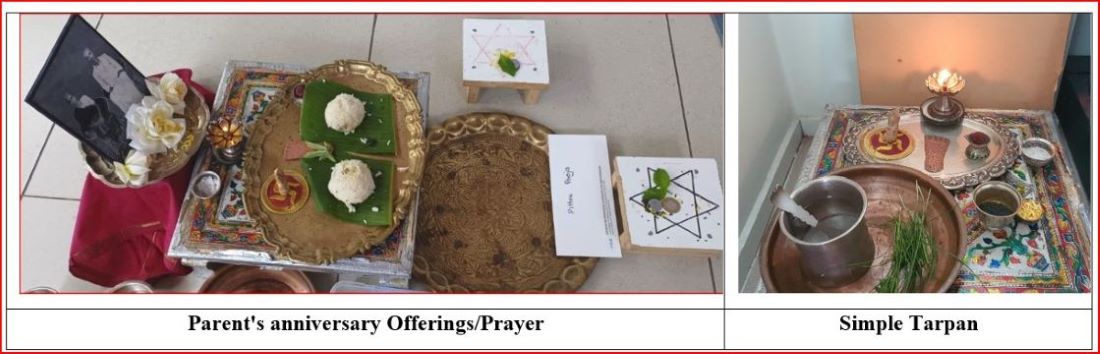
Items required are listed below:
This is for guidance only. However, it is better to make compromises and use whatever available, rather than skipping the ritual altogether.
1 You can face the sun and do tarpana. Alternatively, You can Light oil or ghee lamps if doing inside. தீபம் மேல் நோக்கி எரிவது, பார்ப்பதற்கு லிங்கம் போல் காட்சி கிடைக்கும். Some use Ganesha idol, Rudraksha, Vishnupada for pithru poojas.
2 Can sit on a mat, made of sacred Darbha grass (also known as Kusa grass) / wooden plank or clean cloth made of natural fibers such as cotton or wool, to sit on. Some face east/north or Gaya.
3 Water pot or cup that is convenient to hold in your left hand, and offer water (along with grains if you want). Black sesame seeds (ellu in Tamil, til in Hindi). In some traditions, male use black sesame seeds and females use white sesame seeds. Sesame seeds are the favorites of deceased ancestors' souls. People take Sesame seed based food for quick energy and so may be considered as good for souls who eat once a year.
4 Darbhas or kushas, a sacred grass. If you do not have darbha, use a locally available grass. If that cannot be done, just ignore darbhas and proceed without them.
5 If possible or prefer, wear a Pavitram (or Pavitra) which symbolizes purity and sacredness. Pavitram (rings made with kusha grass or noble metal) is worn on the ring finger prior to starting any religious rite. Some use pavithram ring made of copper, silver or gold.
6 Some place their offerings like Rice balls etc on Vishnupada (gaya tradition). The offerings can be given to birds, fish, cow etc
The belief that the divine exists in all living beings, leads to compassion, coexistence and peace. Even if we pray for our departed ones, just by offering some food to people, animals or fish or bird (can be straw/rice/seeds/), it will be good.
Sesame seeds and rice grains can be put in the well, river or offered to birds. Sesame seeds are a preferred food source for many seed-eating birds, including buntings, chickadees, crossbills, finches, nutcrackers, nuthatches, redpolls, and sparrows, and many more. Uncooked raw rice (Akshada) is also good food for birds. Finches and sparrows with beaks adapted to crush grains would rather have raw grain rice.
तृणम् (த்ருʼணம்) is grass. Kusha or Darbha (कुश குஶ / दर्भ தர்ப) refers to the sacred grass. Darbha grass also known by the names halfa grass, big cordgrss, and salt read-geass.
Kurcham (கூர்ச்சை) - means just a seat or place offered to guests.
|
1. Paternal male ancestors, i.e., the male ancestors on father's side F (father) FF (father's father) FFF (father's father's father) FFFF (father's father's father's father) FFFFF (father's father's father's father's father) |
2. Paternal female ancestors, i.e., the female ancestors on father's side M (mother) FM (father's mother) FFM (father's father's mother) FFFM (father's father's father's mother) FFFFM (father's father's father's father's mother) |
|
3. Maternal male ancestors, i.e., the male ancestors on mother's side MF (mother's father) MFF (mother's father's father) MFFF (mother's father's father's father) MFFFF (mother's father's father's father's father) |
4. Maternal female ancestors, i.e., the female ancestors on mother's side MM (mother's mother) MFM (mother's father's mother) MFFM (mother's father's father's mother) MFFFM (mother's father's father's father's mother) |

Balanced Pithru-Mathru tree for 3 generations:
Joint families sharing resources, were the norm before 100 years. Property including land are shared among relatives (thayathis) based on male lineage. Females leave the family after marriage. So, all rituals are male centric. Even thittu is based on male side relatives. Thittu for demise of sixth generation male side relative is more than for sister's husband. Since sisters do not live under same roof, death in sister's family does not matter much, for day today activities.
Some scholars are of opinion, that both male and female relatives of the dead can perform the rituals.
This rules/rituals are made for our convenience. Divinity is invoked to make people follow and difficult to change established procedures. But with time all will change or will be forced to change
(1) Heaven, Hell and Pithru loga are abstract concepts like Happiness, sadness, fear and suffering. They are not physical worlds or entities.
(2) Pithrus or spirits or atma believed to go through different stages or undergo different experiences. Atma is beyond physical world. No one knows what exactly happens after death. There are many conflicting theories and belief systems based on individual cultural practices. Let us keep them aside. Let us pay our respects to ancestors, to whom we owe our existance!
(3) Pithru rituals are not for pithrus, but for our satisfaction or mental peace. We have to thanks them or pay respects to them as we owe our ancestors. So, it is called "Pithru kadan" (The Debt to Departed Ancestors). This is like prayer to sun or earth, as Sun does not give light just because we say prayer. By this rituals, people are enouraged to do charities and help the needy.
There are more than 100 variations of tarpana/sraddha done in different parts of India. Food preparations vary widely from place to place. Mantras mentioned here are might have been the version developed around 400 years ago in Tamilnadu, based on scriptures like pithru suktha, local customs/habits/traditions and stories. During the last 50 years, the rituals itself is getting modified a lot, due the current conditions of our living. But the essence of the ritual is the same
Any one, Women can do pitru rituals. If there are no sons in a family, daughters can certainly do tharpanam. All can do (karunya) tharpanam for those departed souls who cared for them. The daughter, wife, mother and daughter-in-law of the deceased person have the authority to perform Shraddha (Garuda Purana Preta Khanda 8.3)
Parents Grand Parents etc
பித்ருன் Father
மாத்ரூ Mother
பிதாமஹான் Paternal Grand Father
பிதாமஹீ Paternal Grand Mother
ப்ரபிதாமஹான் Paternal Great Grand Father
ப்ரபிதாமஹீ Paternal Great Grand Mother
மாதாமஹான் Maternal Grand Father
மாதாமஹீ Maternal Grand Mother
மாது: பிதாமஹான் Maternal Great Grand Father
மாது: பிதாமஹீ Maternal Great Grand Mother
மாது: ப்ரபிதாமஹான் Maternal Great Great Grand Father
மாது: ப்ரபிதாமஹீ Maternal Great Great Grand Mother
Other relations like siblings
भगिनी bhaginI sister
सोदर्या sodaryA sister
अग्रजा भगिनी agrajA bhaginI eldersister
ज्येष्ठा भगिनी jyeSThA bhaginI eldersister
अनुजा भगिनी anujA bhaginI younger sister
अत्तिका attikA eldersister
Brother-in-law is called श्र्वशुर्य (śrvaśurya) देवरः (devaraḥ) and आवुत्त (āvutta)
भागिनेय bhAgineya sister's son
भ्रातृजाया bhrAtRjAyA sister-in-law
याता yAtA sisterinlaw
ननान्दा nanAndA sister-in-law [husband's sister]
पितृभगिनी pitRbhaginI father's sister
मातृभगिनी mAtRbhaginI mother's sister
पितृष्वेसा pitRSvesA father's sister
मातृष्वेसा mAtRSvesA mother's sister
ननान्दा nanAndA husband's sister
आवुत्त Avutta sister's husband
भ्रातरौ bhrAtarau brother and sister
ननान्दूपति nanAndUpati sister-in-law's husband
भागिनेयी bhAgineyI niece [sister's daughter]
Seven Generations:
1 Myself Ourselves நாம்
2 Parents தந்தை + தாய்
4 Grand Parents பாட்டன் + பாட்டி
8 Great Grand Parents பூட்டன் + பூட்டி
16 Great Grand Parents ஓட்டன் + ஓட்டி
32 Great Grand Parents சேயோன் + சேயோள்
64 Great Grand Parents பரன் + பரை (பரன் + பரை = பரம்பரை)
சொத்தில் பங்குடையவன் பங்காளி. தாயத்தில் உரிமை உள்ளவர்கள் தாயாதிகள். தாயம் என்றால் சொத்து.
1 உதீரதாமவர உத்பராஸ உன்மத்யமா: பிதரஸ் ஸோம்யாஸ:| அஸும் ய ஈயுரவ்ருகா ருதஜ்ஞாஸ்தே நோவந்து பிதரோஹர்வேஷு|| அங்கீரஸோ ந: பிதரோ ந வக்வா அதர்வாணோ ப்ருகவ: ஸோம்யாஸ: | தேஷாம் வயம் ஸுமதௌ யஜ்ஞியானாமபி பத்ரே ஸௌமனஸே ஸ்யாம || ஆயந்து ந: பிதரஸ் ஸோம்யாஸ:| அக்னிஷ்வாத்தா: பதிபிர் தேவயானை: | அஸ்மின் யஜ்ஞே ஸ்வதயா மதந்து அதிப்ருவந்து தே அவந்த்-வஸ்மான் ||
Like the great ancestors who have performed the Somayagam, may others who have not performed yagams attain the highest destiny. May they be free from anger towards us, and attend the karma we do for them. Requesting them to save our life, and protect us when we call upon them. Our ancestors, who are called Angikarasar, Atharvanar, Bhrigu, are the ones who bestow blessings and let us follow the intellectual or spiritual or holy path of great ones. Like them, may we also become auspicious and well-minded. May our ancestors, who are called Agnishwattas and those who have performed the Somayagam, arise here and be pleased with the rituals we perform and protect us
2 ஊர்ஜம் வஹந்தி-ரம்ருதம் க்ருதம் பய: கீலாலம் பரிஸ்ருதம் ஸ்வதாஸ்த தர்பயத மே பித்ரூன் || பித்ருப்ய: ஸ்வதாவிப்ய: ஸ்வதா நம: | பிதாமஹேப்ய: ஸ்வதாவிப்ய: ஸ்வதா நம: | ப்ரபிதாமஹேப்ஹ்ய ஸ்வதாவிப்ய: ஸ்வதா நம: || யே சேஹ பிதரோ யே ச நேஹ, யாக்ச்ச வித்மயான் உச ந ப்ரவித்ம | அக்னே தான் வேத்த யதி தே ஜாதவேதஸ் தயா ப்ரத்தக்ம் ஸ்வதயா மதந்தி ||
Oh waters, you possess the essence of everything. Therefore, by transforming yourself into nectar, ghee, or milk, please our ancestors. I bow to the ancestors uttering the word Swata, which satisfies them. We may not know all our ancestors, and those who are not here for this ritual. Oh Lord of Fire, the all-knowing Jataveda, you know them all and help us to make them happy.
3 மது வாதா ருதாயதெ | மது க்ஷரந்தி ஸிந்தவ: மாத்வீர் நஸ் ஸந்த்வோஷதீ: || மது நக்த முதோஷஸி மதுமத் பார்திவ ரஜு: மது த்யௌரஸ்து ந: பித || மதுமாந் நொ வனஸ்பதி: | மதுமாந் அஸ்துஸூர்ய: மாத்வீர் காவோ பவந்து ந: ||
May the wind blow sweetly and the rivers flow with sweetness. May the plants and trees give sweetness. May the night and morning be sweet. May the sun, the earth and dust be pleasant. May the cows give sweet and good milk.
